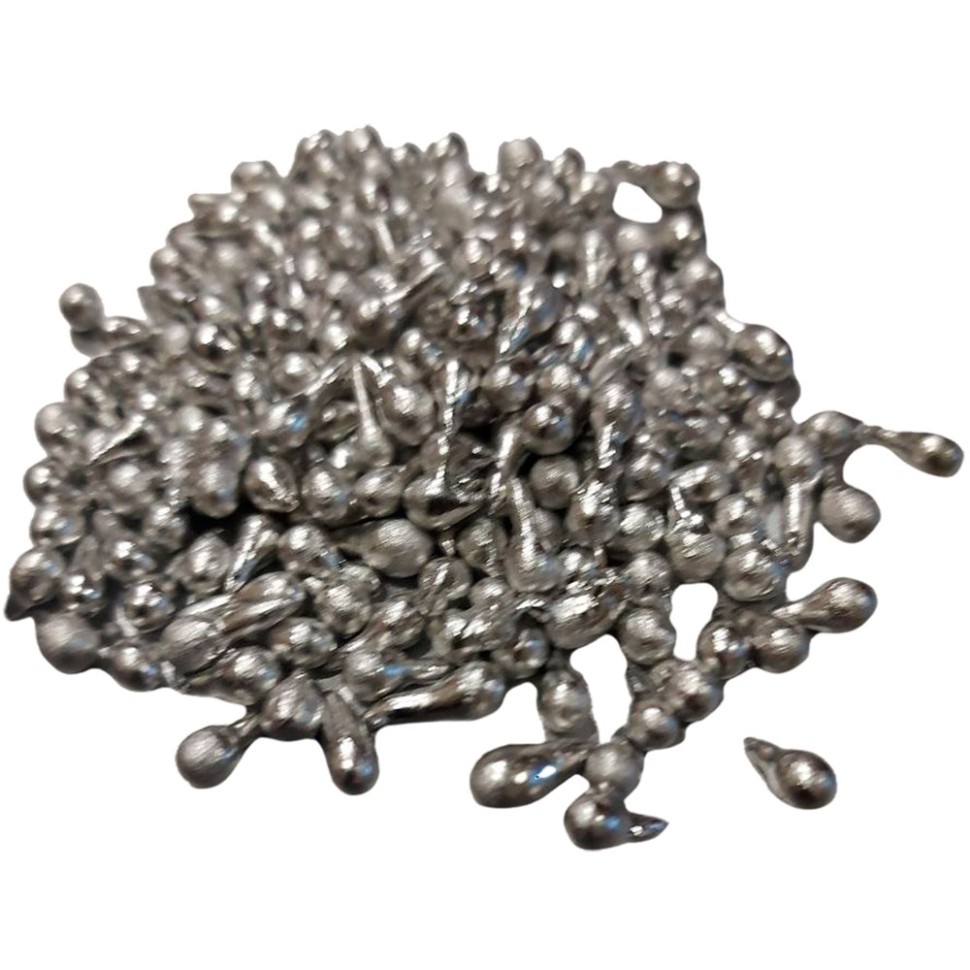
Tin (wire)
Price on request. The cost is calculated individually, taking into account volumes, packaging and delivery region.
Request a quote →Description and specifications
Tin, GOST 860-75
| Brand | Melting point | Boiling point | Density | Application area |
|---|---|---|---|---|
| OVCh-000 | 232 °C | 2620 °C | 7.31 g/cm3 | For semiconductor technology |
| OVCh-00* | 232 °C | 2620 °C | 7.31 g/cm3 | For the production of thermally polished glass |
| Tin O1 pch | 232 °C | 2620 °C | 7.31 g/cm3 | For the production of tinplate |
| Tin O1 | 233 °C | 2621 °C | 7.31 g/cm3 | For the manufacture of foil, tape, wire and other products, for electrical circuits |
Tin, Sn (Stannum) belongs to the 14th group of the periodic table, atomic number 50. Belongs to the group of light metals. Tin is a ductile, malleable, low-melting, shiny metal of a silvery-white color. Tin is used primarily as a safe, non-toxic, corrosion-resistant coating in its pure form or in alloys with other metals. It is used in the production of tinplate for food containers and tableware. It is also used in alloys with other metals, such as lead, indium, copper, bronze, zinc, and antimony (tin-lead and tin-indium solders, tin babbitts), in electronics, and in the production of sheet glass.
Tin has found application in the creation of superconducting wires. Tin is a key alloying component in the production of structural titanium alloys. Tin grades OVCh00, OVCh00 (high-purity tin) are widely used in the field of clean technologies.
Melting point - 232 °C,
Boiling point - 2620 °C,
Density - 7.31 g/cm3
Enquire about: Tin (wire)
Fill in the form — your e-mail client will open with a pre-filled message to cardenostrade@gmail.com. We reply with pricing, specifications and delivery terms.